5 Vegetables My Grandma Always Planted in the Spring (And I Still Do Today)

Some people start the spring garden with big plans and seed catalogs spread across the kitchen table.
Truth be told… I still love my seed catalogs. I love flipping through the pages on a gray February afternoon, dog-earing varieties I may or may not ever plant, imagining trellises heavy with beans and rows that look far more ambitious than my energy sometimes allows.
But when it comes time to actually plant the garden, I usually start the way my grandma did: with a few simple crops that are almost impossible to mess up.
These are the vegetables she planted because they were reliable, useful, and early. The kind of things the body and the taste buds crave after a long winter. And now, all these years later, I find myself planting the very same things.
If you’ve been low on energy, behind on the season, or you just want a spring garden that feels easy and encouraging, this is the list I’d start with.
When to plant these early spring vegetables
One of the things I appreciate most about these old-fashioned spring crops is that they’re not fussy about timing. My grandma didn’t track soil temperatures or study frost charts. She planted when the ground could be worked and the air felt like it had finally turned a corner. As a general rule, these cool-weather vegetables can be planted:- In early spring, once the soil is no longer frozen
- When daytime temperatures are consistently above freezing
- A few weeks before your last expected frost date
Why these 5 crops are so easy
My grandma wasn’t interested in complicated. She planted what worked.
These five crops are “easy spring garden” favorites because they’re:
- Cool-weather tolerant (they like spring weather)
- Fast – you get results quickly
- Small-space friendly (raised beds or a little backyard plot works fine)
- Forgiving (they don’t need perfect conditions to do well)
- Practical (they actually show up in real meals)
And maybe the best part? These are the kinds of vegetables that build confidence. You plant them… and before you have time to overthink, you’re harvesting.
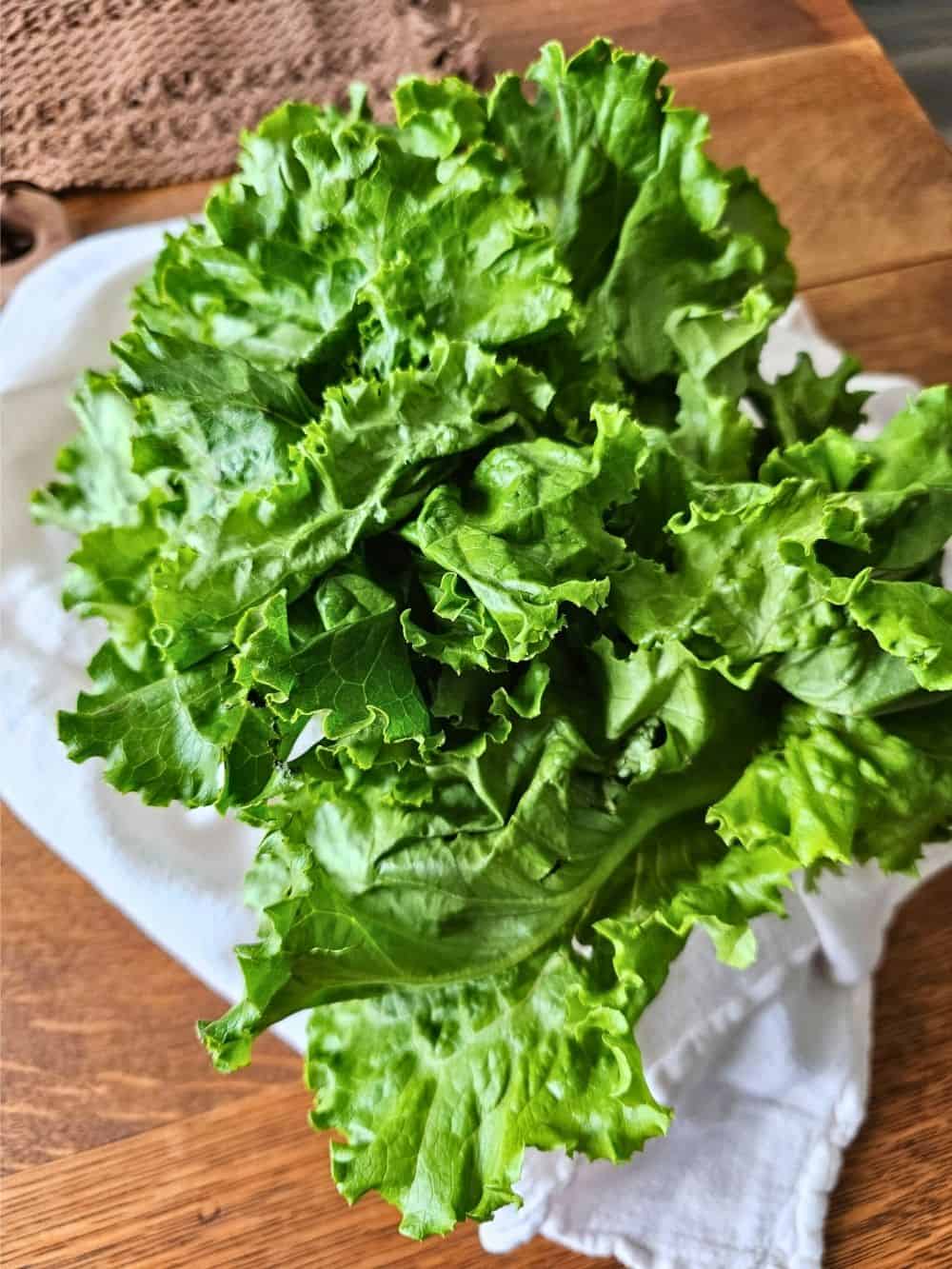
1. Cut-and-come-again lettuce
Grandmas are savvy enough to love anything that keeps giving without asking much in return, and leaf lettuce is exactly that. You scatter seed, keep it watered, and suddenly you have salad bowls overflowing with leafy goodness.
Why my grandma planted it:
- It’s one of the earliest things you can harvest
- Reduces waste because you can harvest only what you need
- It makes the garden feel “alive” quickly
Why I still plant it:
- It’s low-effort and forgiving
- It’s perfect for raised beds, containers, or a small plot
- Versatility – there are many varieties you can use for cut-and-come-again harvesting. Leaf lettuce, spring mixes, and butterhead lettuces are all good choices.
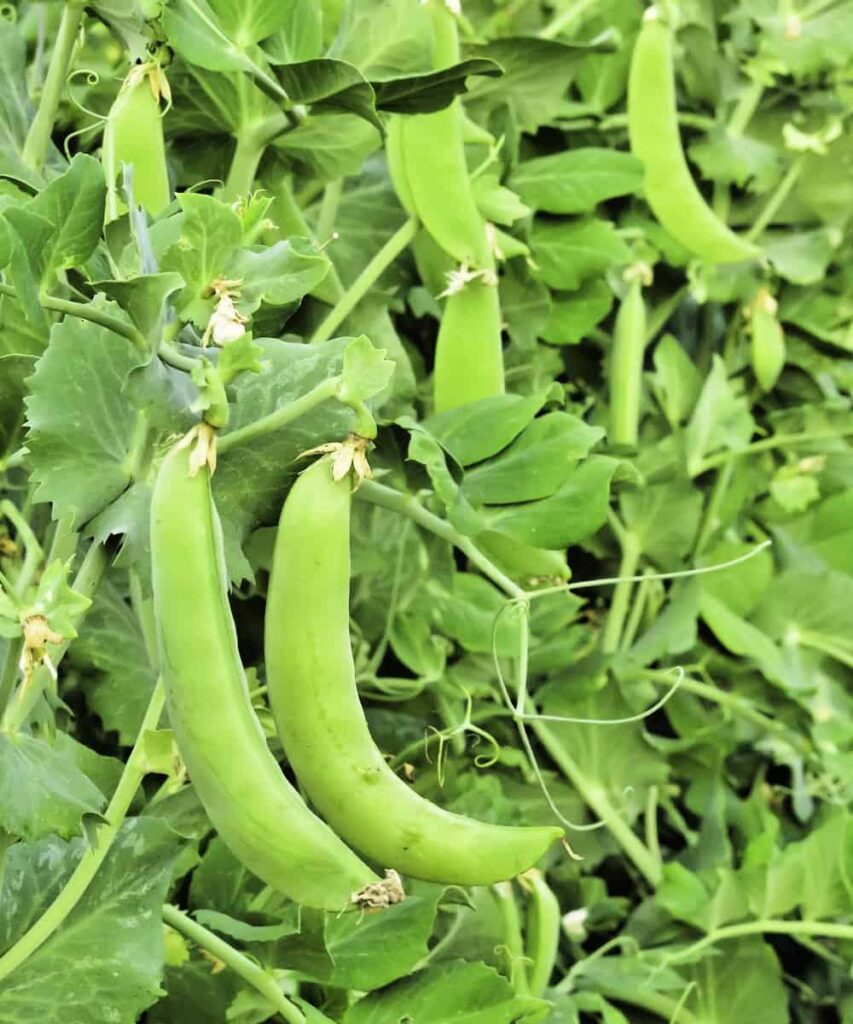
2. Peas
Peas are one of those crops that make spring feel official. There’s something about seeing those little tendrils climb and curl that feels hopeful and like the garden is waking up.
Why my grandma planted them:
- They love cool spring weather
- They don’t require much fuss
- They’re a “real” harvest early in the season before you get the tomatoes, peppers, and squashes of the summer garden.
Why I still plant them:
- They make great use of vertical space
- They’re fun to pick (and snack on right in the garden)
- They’re one of the first things to taste like spring
3. Radishes
They sprout fast, grow fast, and they’re ready before you have time to doubt yourself. My grandma planted them along the edges and in any spare space, because she didn’t waste good ground.
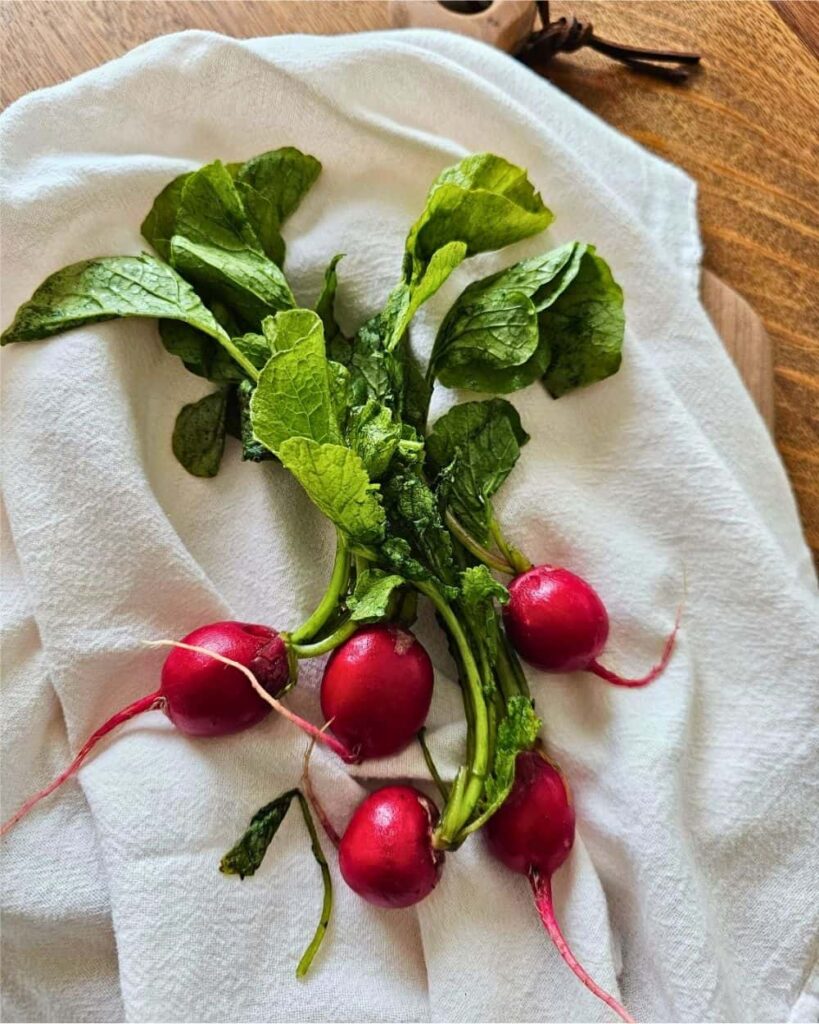
Why my grandma planted them:
- They’re quick (often ready in a few weeks)
- They fill gaps between slower crops
- There’s no waste, because the greens can be eaten, too
Why I still plant them:
- They’re practically instant gratification
- They’re great for beginner gardeners
- They remind me the garden doesn’t have to be complicated
4. Green Onions
Green onions are one of those quiet, practical crops that makes everyday food taste better.
My grandma always had a row of onions somewhere. Usually tucked discretely along an edge of the garden, like they were minding their own business. A little handful could flavor soup, eggs, potatoes, beans… pretty much anything.
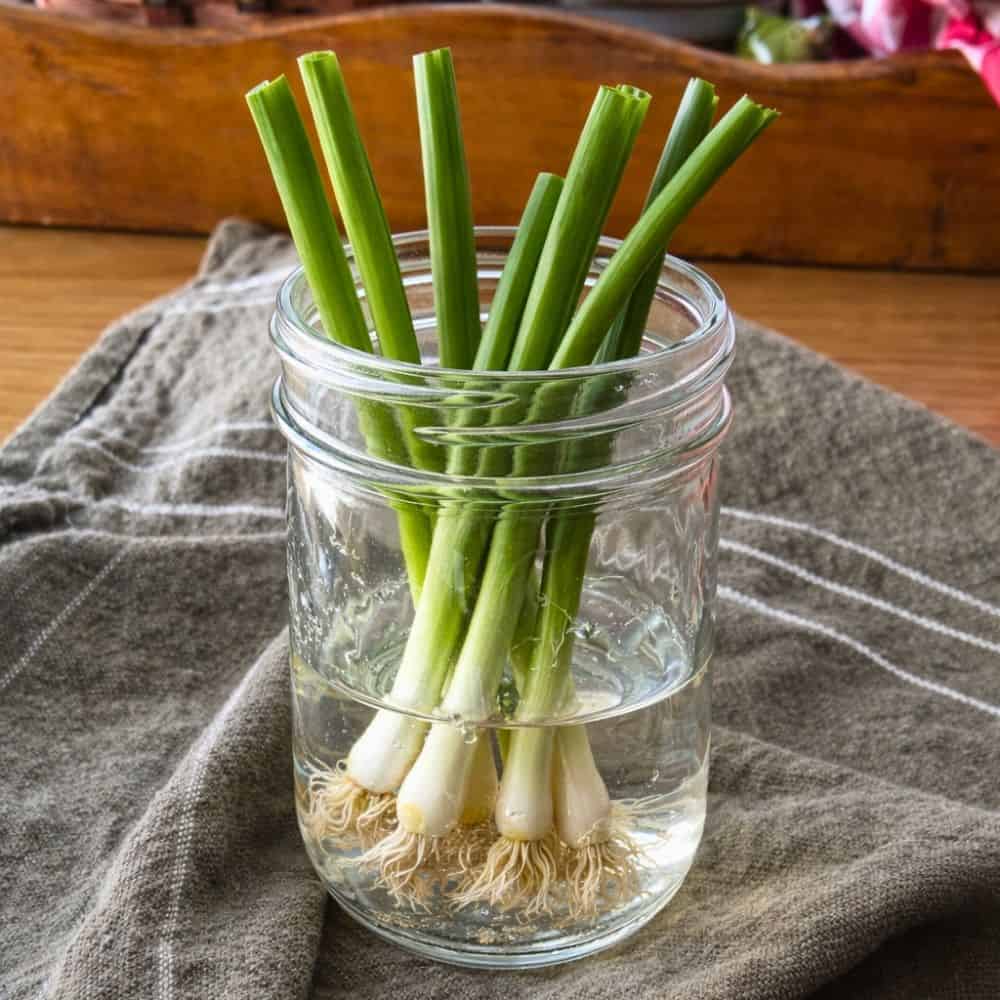
Why my grandma planted them:
- They take up very little space
- They’re useful in almost any meal
- They’re easy to harvest “as needed”
Why I still plant them:
- I love having something fresh to snip
- They’re low-maintenance
- They’re a good companion plant and act as a natural pest deterrent
5. A cool-weather herb: chives or parsley
Herbs are easy, fresh flavor. With herbs, you’ll always have something fresh to snip and add to everyday cooking.
Here are two easy cool-weather choices:
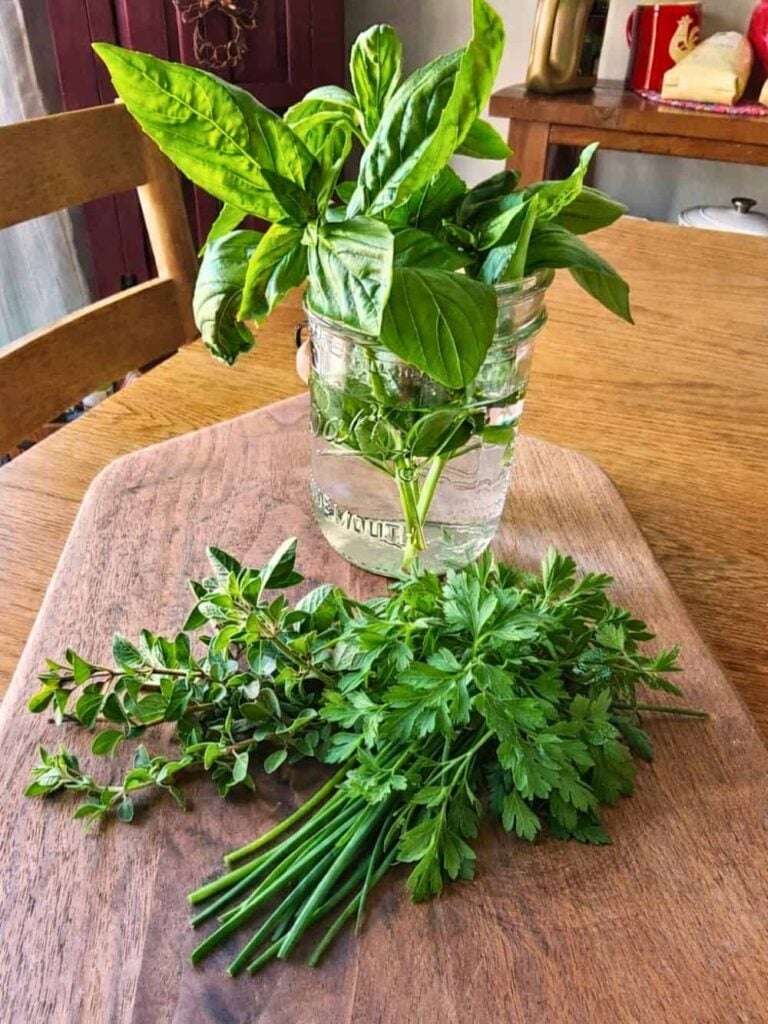
Option A: Chives (my “easy button” pick)
Chives come back year after year, they’re hardy, and they taste like mild onion. They’re perfect for eggs, potatoes, soups, and biscuits.
Option B: Parsley (classic and surprisingly tough)
Parsley is one of those herbs that quietly does its job. It grows well in spring and can handle cool temps better than most people expect.
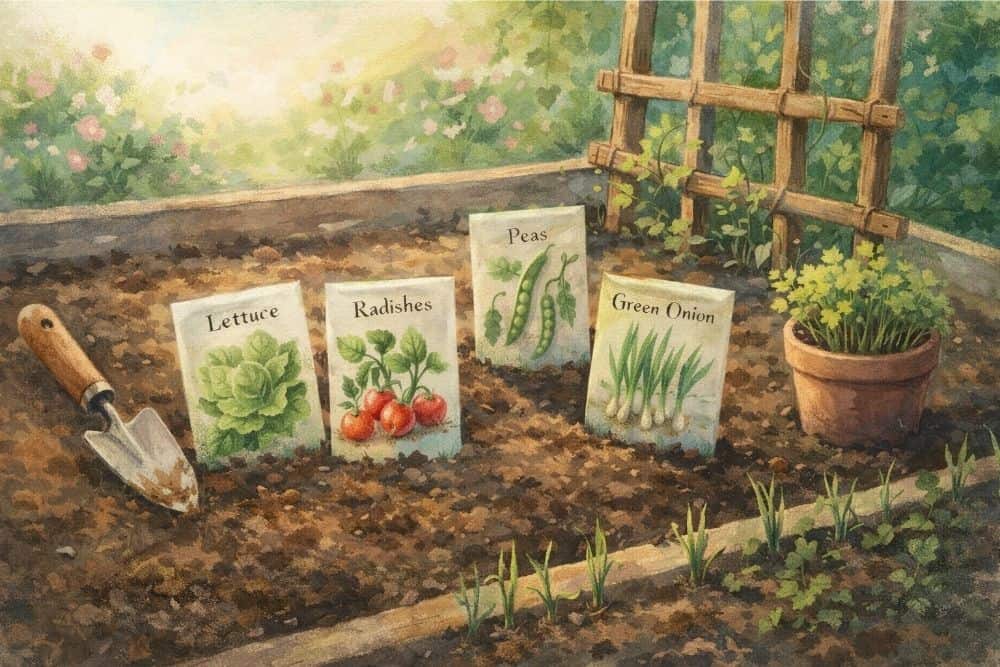
A simple weekend planting plan
If you want this to feel doable (and not like a whole lifestyle overhaul), here’s a gentle plan:- Choose one small bed, one corner of the garden, or a few containers.
- Plant lettuce and radishes first (quick wins).
- Put peas along a fence or quick trellis.
- Plant green onions along the edge.
- Finish with chives or parsley in a spot you’ll remember to water.
Frequently Asked Questions
These cool-weather crops can be planted as soon as the soil can be worked and the worst deep freezes are behind you. They’re meant for early spring conditions.
You’re not behind. If it’s still spring, give it a go. Even a small planting now is still worth doing.
Yes — especially lettuce, radishes, green onions, and herbs. Peas can work too with a simple trellis or support.
Plant lettuce. If you can plant two things, add radishes. Quick wins matter.
Garden Equipment I Recommend
These are affiliate links, which means I get a small commission on any purchases, at no extra cost to you.
So there you have it, folks. My recommendations for planting a simple but satisfying spring garden. No need to make it complicated. These garden crops are practical and unfussy.
And I think it’s worth mentioning, in case you’re feeling pressure to do things the “right” way like we see on our social media feeds or in YouTube videos. We don’t need to make our gardens Instagram-worthy. Our gardens care nothing about influencers, and our grandmothers didn’t call it homesteading or preparedness or slow living. They just called it life, and tended it one small row at a time.
If you try this little “grandma spring garden,” I’d love to hear what you planted first. And if you grew up with a grandma (or mom, or aunt, or grandpa) who had a particular spring garden tradition, tell me about it in the comments. I never get tired of those stories.

This post may contain affiliate links. That simply means if you choose to purchase through one of my links, I may earn a small commission—at no extra cost to you. As always, I only share products I truly use and love in my own kitchen.